Facility Scope and Strategic Mandate
Europe has formally initiated the Physical AI Growth Lab across connected testbeds in Munich, Zurich, and Paris. This initiative bridges pure generative neural weights with actual mechanical torque. While conventional software agents execute workflows in browser tabs or sandbox containers, physical agents must interpret friction, sensor drift, and material elasticity in three-dimensional space.
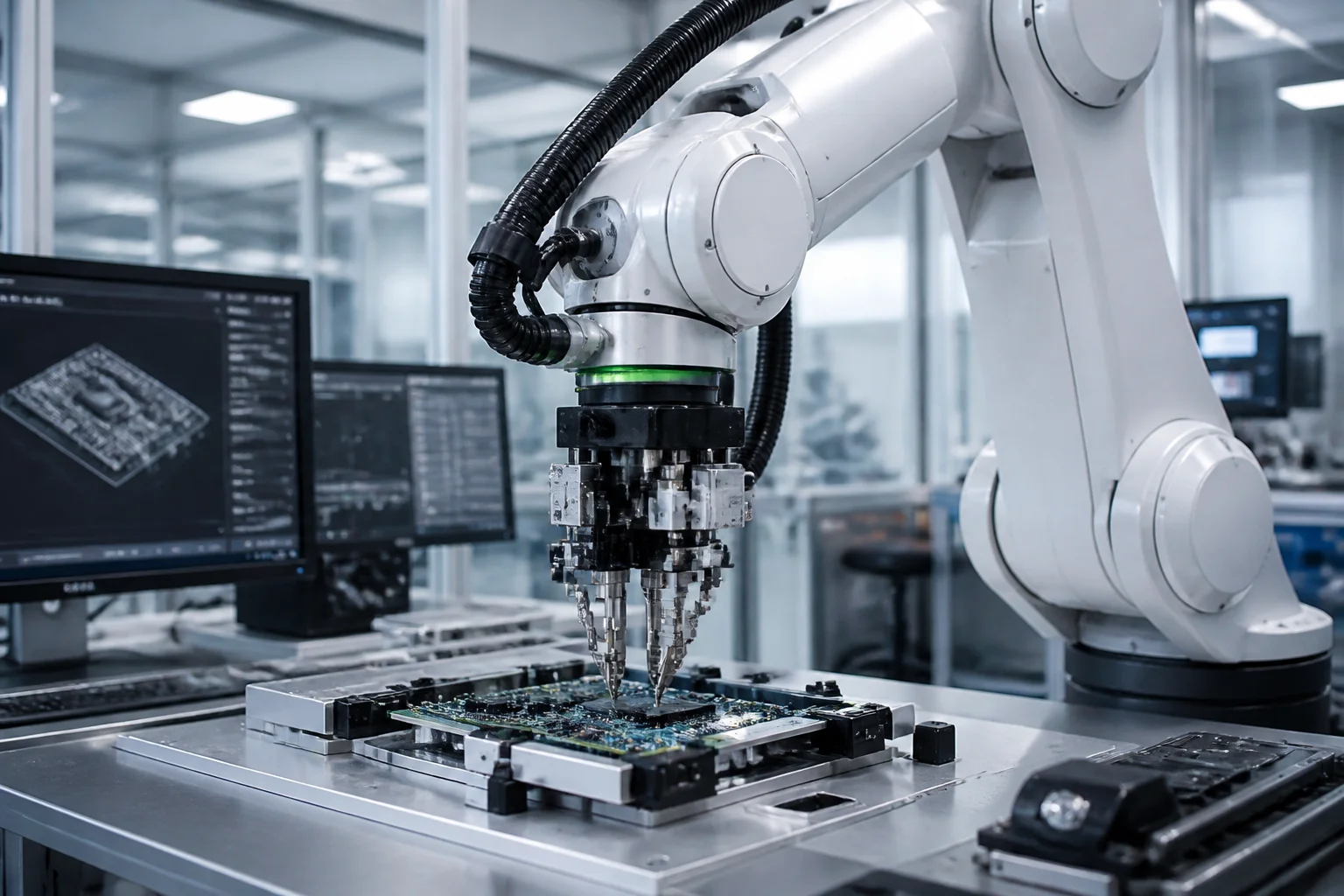
The facility provides engineering teams with high-speed digital twin simulation clusters linked directly to robotic arms, mobile manipulators, and automated guided vehicles. Rather than depending exclusively on synthetic simulation loops, participating development groups stress-test their policies across seventy standardized mechanical cells under unpredictable workshop conditions.
Build Robotic Control Pipelines
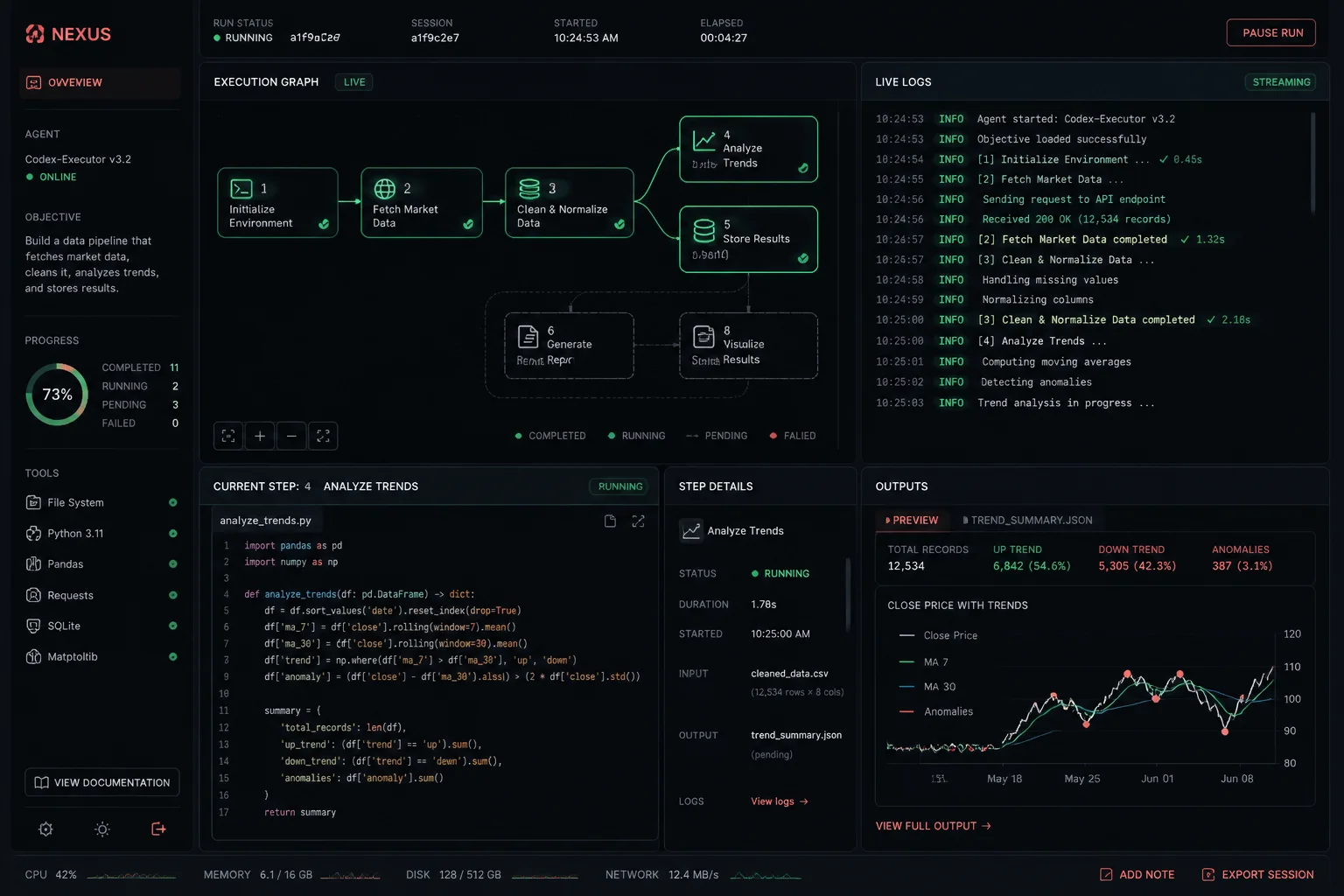
Follow our hands-on tutorials for implementing tokenized trajectory outputs with modern agent APIs.
Vision-Language-Action Architecture
At the center of the testing pipeline is a modular Vision-Language-Action (VLA) backbone capable of ingesting high-framerate depth feeds alongside natural instruction tokens. Instead of generating text outputs, the network projects directly onto end-effector velocities, joint impedances, and magnetic gripper states.
- Multimodal perception layers convert RGB-D frames into 3D voxel patches at 120Hz.
- Diffusion-based policy heads synthesize smooth continuous trajectories without discrete action quantization.
- Safety watchdog microcontrollers enforce joint limit boundaries and contact pressure ceilings at hardware level.
Sim-to-Real Convergence
Hybrid training combining domain randomization with physical telemetry achieves a 94.2% initial deployment success rate on zero-shot manipulation challenges.
Decoupled Safety Co-Processors
Deterministic firmware monitors prevent erratic model behaviors from damaging physical laboratory equipment during aggressive exploration phases.
Hardware-in-the-Loop Benchmark Results
During initial benchmarking rounds, teams compared traditional rule-based robotic controllers against end-to-end embodied neural models on precision tasks including wire harness routing, delicate fastener placement, and deformable packaging inspection. Models trained inside the Growth Lab exhibited a 42% reduction in cycle-time anomalies compared to baseline simulation-only weights.
Industrial Adoption and Long-Term Trajectory
The Physical AI Growth Lab signals a decisive transition from digital reasoning into mechanical autonomy. By anchoring validation procedures in tangible factory conditions, European engineering teams establish reliable precedents for deploying autonomous machine agents in aerospace, electronics assembly, and high-precision logistics environments.